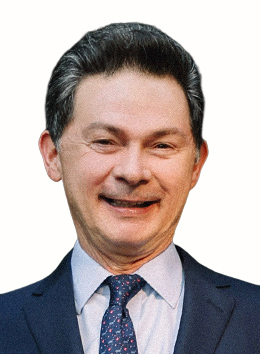
Prof. Guillermo Gallego
The Chinese University of Hong Kong-Shenzhen
Talk: Dynamic Pricing Over Two Timescales: Martingales, Unit Revenues, and Transaction Prices
Abstract: In the canonical finite-horizon dynamic pricing model, we establish opposing martingale behavior on different observation clocks. In calendar time, posted prices are submartingales under broad curvature conditions, while consumer surplus is an exact martingale for affine pricing maps and a strict supermartingale for logit demand.
At sale epochs, we distinguish two objects. First, firm-side unit revenues: for CES, exponential, and linear demand, revenues from successive units of inventory form a supermartingale at sale epochs, moving in the opposite martingale direction from calendar-time posted prices. Second, transaction prices: sales occur at endogenous stopping times biased toward low-price states, where the scarcity jump from inventory depletion opposes the downward drift from time passage. For CES demand, drift dominates at every horizon. For exponential and linear demand, the balance between scarcity and drift generates unique transaction-price thresholds, and the corresponding consumer surplus thresholds occur strictly earlier. For logit and shifted-CES demand, thresholds exist, with uniqueness reduced to rootwise conditions.
Our analysis develops a generator identity, a triple equivalence theorem, and a scarcity--drift decomposition unifying price and welfare dynamics.
Biography: Prof. Gallego's research interests are Dynamic Pricing and Revenue Optimization, Supply Chain Management, Electronic Commerce, and Inventory Theory. He has published influential papers in the leading journals of his field where he has also occupied a variety of editorial positions. His work has been supported by numerous industrial and government grants. In addition to theoretical research, Prof Gallego has developed strong collaboration with global corporations such as Disney World, Hewlett Packard, IBM, Lucent Technologies, Nomis Solutions, and Sabre Airline Solutions. He has also worked with government agencies such as the National Research Council, the National Science Foundation in United States and the Ireland Development Agency. His graduate students are associated with prestigious universities and occupy leading roles in their chosen fields. He spent his 1996-97 sabbatical at Stanford University and was a visiting scientist at the IBM Watson Research Center from 1999-2003. Professor Gallego received both his PhD degree and MS degree in Operations Research and Industrial Engineering from Cornell University in 1988 and 1987.